US FDA Performance Tracker

The FDA’s contrasting decisions on leucovorin and idebenone reveal a tightening regulatory stance where only therapies showing strong mechanistic rationale and large, credible treatment effects can overcome the limitations of nontraditional evidence sources.

The US FDA Commissioner's National Priority Voucher program is speeding clearance of products advancing agency priorities, but are recent quick approvals more attributable to the Real-Time Oncology Review (RTOR) program?

March's FDA user fee calendar is defined more by repeated review cycles and regulatory recalibration than breakthrough innovation, signaling a cautious start to 2026’s novel approval momentum.

Moderna’s mRNA-1010 is an outlier among RTF recipients, which are dominated by rare disease and neuroscience candidates, such as Axsome’s fibromyalgia drug and Neuvivo’s ALS immunotherapy.

Disc Medicine's bitopertin, the first novel agent with an FDA Commissioner's National Priority Voucher to complete a review, failed to show biomarker endpoint was associated with clinical benefit, the complete response letter states.

PTC apparently has accepted defeat after 12 years trying to gain US approval of its DMD drug, which included a complete response and two refuse-to-file letters.
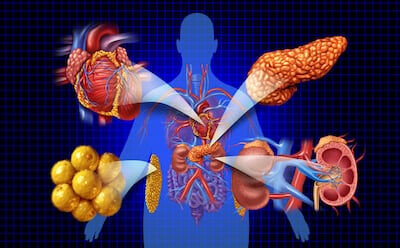
Obesity will continue dominating the cadiovascular, renal and metabolic field in 2026, but the US FDA's Commissioner's National Priority Voucher program could disrupt the user fee calendar throughout the vast sector.

The unusual revision of Corcept’s complete response letter suggests the FDA may be writing for a different audience now that unapproved product CRLs are being made public.

Internal stress could break the FDA's streak of consistently high novel agent approval counts, despite beginning 2026 with almost as many goal dates as the past three years even though biologics center submissions plunged.

The FDA starts 2026 with 55 novel agents under review, which are detailed in Pink Sheet's interactive chart.

Review times for novel agents approved in 2025 stayed remarkably steady, hugging PDUFA timelines, maintaining high approval volumes, and foreshadowing a new debate over whether ultra‑fast, politically driven reviews will result from the Commissioner's National Priority Voucher program.

Interactive infographic tracking submission to approval for all 58 novel agents approved by US FDA in 2025

More complete response letters were issued than approvals for novel neuroscience candidates in 2025. Orphan neurology therapies were hit the hardest.

Pink Sheet's annual listing of novel agents and the review designations they carried

While the volume of applications was one of the highest in the decade, a high rate of complete response letters winnowed the pool to an approval total near the 10-year average of 56. The approval total for 2025 is very close to the 61 new molecular entities and novel biologics approved in 2024.

Saol Therapeutics cannot conduct a new clinical trial of SL1009 in ultra-rare mitochondrial disorder, but aims to answer the FDA's complete response letter with new looks at available data.

Non-malignant hematology, respiratory and cardiometabolic candidates make up for an unusual lack of oncology products on the US FDA’s December user fee goal calendar.

The orphan drug share of US FDA’s 2025 novel approvals is holding steady, with examples of approvals based on a single trial with confirmatory evidence from UCB, Precigen, Jazz Pharmaceuticals and Stealth Biotherapeutics

A cluster of CRLs for rare disease applications based on one trial plus confirmatory evidence may represent a shift away from the regulatory flexibility that had come to characterize ultra-rare drug development

Eight novel agents have user fee goal dates in November, which keeps the possibility of matching or topping the 2024 annual count alive.