Blood Disorders
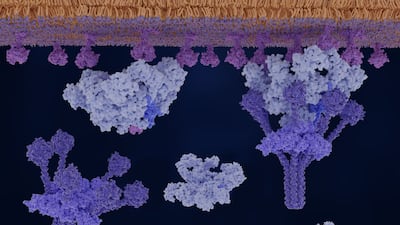
Alexion is leveraging long standing C5 leadership to expand into proximal complement targets and alternative pathway drugs, pairing longer acting and subcutaneous options with genetically guided precision medicines.

The companies presented 52-week data from the pivotal Phase III VERIFY study at the recent American Society of Hematology meeting, after releasing 32-week data earlier this year.

The Phase III portion of the Phase II/III RISE UP study in sickle cell disease met the hemoglobin response primary endpoint, but not the sickle cell pain crisis reduction co-primary endpoint nor a secondary endpoint on reducing fatigue.

While the European Medicines Agency’s human medicines committee voted in favor of EU approval for 10 new products, it reaffirmed its previous decision not to grant Aqneursa new active substance status.

With Phase II data for sutacimig in Glanzmann thrombasthenia in hand, Hemab’s series C round will fund a pivotal trial as well as a Phase II study for HMB-002 in von Willebrand disease.

Approval in alpha- and beta-thalassemia by a Sept. 7 action date seemed assured, but an FDA review of proposed REMS regarding potential liver injury pushed it back to Dec. 7.

Cessatech and Proveca’s investigational, sufentanil/ketamine fixed-dose combination analgesic nasal spray is among the latest drugs that the European Medicines Agency has started to review for potential pan-EU marketing authorization.

The drugmaker reported a negative Phase III study for inclacumab, after a partial clinical hold for osivelotor and pulling Oxbryta from the market.

Takeda/Protagonist are awaiting 52-week data to confirm the results from the VERIFY trial of the drug in polycythemia vera.

Pfizer cited many reasons for ending sales of hemophilia B gene therapy Beqvez, including a lack of patient and doctor interest. The company no longer plans to develop AAV gene therapies.
Hematologists discussed the still limited treatment options for sickle cell disease at ASH, weighing the risks and benefits of disease-modifying versus curative therapies after the withdrawal of Pfizer’s Oxbryta (voxelotor).
Hematologists’ concerns about hepatoxicity with hemophilia A gene therapies may limit use, but Phase III data for Pfizer’s candidate at ASH show a lower rate of ALT increases than seen with BioMarin’s Roctavian.