Comp

Serial patent litigations have become a loophole in the Hatch-Waxman Act, disbalancing the scale of innovation and competition, said Jon Potter, executive director of the newly established Coalition Against Pharma Patent Abuse, in an exclusive Generics Bulletin interview.
Uncover how synthetic biology, biomarkers, and GenAI are advancing ADCs - and why CROs are essential to clinical and regulatory success.
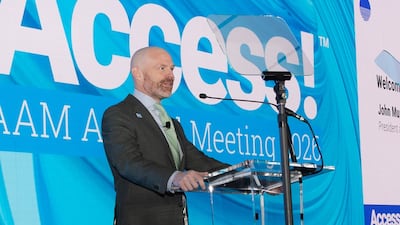
After an eventful 2025 that saw the US off-patent industry chalk up wins on tariffs and biosimilar streamlining, AAM president and CEO John Murphy III talks to Generics Bulletin about how the association will be stepping up its lobbying efforts in a US election year.

In this week's episode: many blockbusters to fade this year: semaglutide’s India reckoning; multinationals look beyond simple China licensing; Almirall eyes China dermatology assets; EU urged to restore biopharma competitiveness.

Pink Sheet editors discuss the impact of a federal judge’s decision that the recent ACIP membership turnover and vaccine schedule changes likely violated statutes, as well as the FDA’s look at new opioid disposal requirements.

Inside the operational, technical, and strategic decisions behind scaling a complex sterile vaccine program in under two years

The final week of February saw the AAM hold its Access! 2026 annual conference in Miami and Medicines for Europe hold its annual regulatory and scientific affairs conference in Amsterdam. Generics Bulletin was there at both events and our reporters discuss the key takeaways in our latest podcast.

In this week's episode: Roche faces giredestrant Phase III setback; founders exit BioNTech; Ipsen to withdraw Tazverik; tough times for Bayer; and another boost for UCB’s Bimzelx.
Pink Sheet editors discuss the direction of the FDA and CBER after Vinay Prasad’s exit, CBER’s similarities to the Harry Potter saga, as well as the Real-Time Oncology Review pilot’s contributions to Commissioner’s National Priority Voucher approval times.
San Diego-based Onchilles Pharma's neutrophil-derived ELANE pathway agent N17350 targets a universal cancer vulnerability, combining direct tumor killing with immune activation. It is now entering first-in-human trials across solid tumors.

Biologics and advanced therapies are reshaping the technical requirements of formulation and manufacturing. In our latest video, we examine how excipient science is advancing to meet these demands through ultra-high purity stabilizers, strengthened global supply strategies, and formulation expertise

Sandoz has unveiled a major reorganization of its generics and biosimilars operations into two distinct businesses, bringing in Ferring and Merck veteran Armin Metzger to lead a new global biosimilars unit while at the same time assigning existing executives to generics roles.