New Science
San Diego-based Onchilles Pharma's neutrophil-derived ELANE pathway agent N17350 targets a universal cancer vulnerability, combining direct tumor killing with immune activation. It is now entering first-in-human trials across solid tumors.

Something fundamental has shifted in cell therapy investment over the past 18 months. No longer about which science works, it has evolved around the question of which business model pharma believes it can scale. Increasingly, that question is being answered before a single patient is enrolled.
Swedish biotech Affibody is using tiny engineered proteins to expand radioligand therapy's target space. CEO David Bejker details its HER2 program, Albumod technology and partnership strategy.
Airway Therapeutics' surfactant protein D replacement therapy showed promising Phase Ib results in preventing bronchopulmonary dysplasia, now advancing to Phase II/III registration trial in preterm infants.
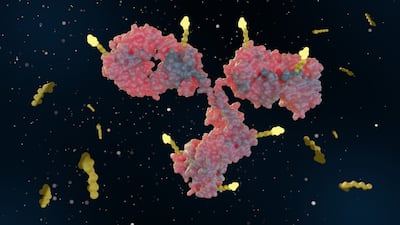
The antibody-drug conjugate pipeline has more than doubled to 895 candidates since 2023, with DNA topoisomerase I overtaking HER2 as the dominant target.

The Swedish biotech's LIB-01 offers eight-week efficacy from three-day dosing, targeting high discontinuation rates with current PDE5 inhibitors.

Executives at the cell and gene therapy accelerator ElevateBio point to clinical impact, expanding toolbox and manufacturing improvements as reasons for optimism.
Four organizations pursue distinct virtual cell strategies: Xaira emphasizes perturbational data, CZI builds modular foundations, Recursion integrates lab-in-loop validation, Noetik starts with patient tissue for drug discovery.

Denmark’s €80m QuNorth project, co-led by the Novo Nordisk Foundation, launches most powerful quantum computer to advance drug discovery and broader scientific research across the Nordics.

Jason Menzo, CEO of the Foundation Fighting Blindness, says the organization is adapting its funding strategy, navigating regulatory challenges and accelerating the translation of academic discoveries into industry-led clinical development.

Mini-profiles of five synthetic biology companies and their leaders from SynBioBeta 2025 reveal how AI integration, data-driven platforms and interdisciplinary teams are revolutionizing drug discovery and manufacturing.
Phenomix Science presented new data at Digestive Disease Week 2025 showing its machine learning-assisted genetic risk score can predict nausea and side effects from GLP-1 receptor agonists, aiding personalized obesity treatment.