Ophthalmic
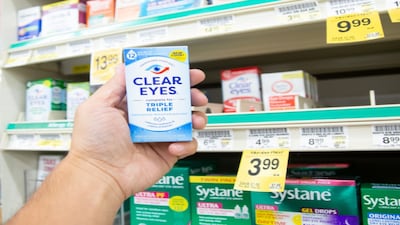
Returning to full Clear Eyes production and distribution and brand’s previous revenue levels aren’t expected within PCH’s current fiscal year, which ends in March; additional marketing spend expected.

Another regulatory blow has not stopped Outlook Therapeutics and its ophthalmic bevacizumab, yet.

The sponsors of seven new medicines nearing the end of their EU regulatory review are due – or possibly due – to appear before the European Medicines Agency’s human medicines committee, the CHMP, to address remaining concerns about their marketing applications.

Sandoz has been given the go-ahead to introduce the first biosimilar to Eylea in Australia following a favorable court ruling denying a temporary injunction.

After pinning its hopes on a trial that did not meet its primary endpoint, Outlook Therapeutics is disappointed that the US FDA has again rejected its Lytenava ophthalmic formulation of bevacizumab, with the firm pointing to “only one deficiency, for a lack of substantial evidence of effectiveness.”

Harrow is taking aim at launching new partner Samsung Bioepis’ Byooviz biosimilar to Lucentis in 2026.

PCH lowers full-year guidance even after reaching $100m deal to acquire Canadian sterile ophthalmic manufacturer for its Clears Eyes line troubled by supply slumps for several years. Its $47.5m reported net sales for April-June period were down 6% from a year ago.

Jason Menzo, CEO of the Foundation Fighting Blindness, says the organization is adapting its funding strategy, navigating regulatory challenges and accelerating the translation of academic discoveries into industry-led clinical development.
CEO Len Schleifer said during the company’s first quarter earnings call that most of the complete response letters the company has received related to third-party suppliers, not efficacy or safety.
CEO Len Schleifer explained on the company’s Q1 earnings call that most of the complete response letters the company has received related to third-party suppliers, not efficacy or safety.

The company closed a $150m series C funding round shortly after opening the second part of its Phase I/II study of ATSN-201 and partnering with a Nippon Shinyaku on ATSN-101.

Several new drugs that are yet to be approved anywhere in the world are now under review by the European Medicines Agency for potential pan-EU marketing authorization.