Complete Response Letters

An HHS administrative law judge will preside at the formal evidentiary hearing, which stems from a 2019 complete response letter that was followed by administrative and legal appeals, even though Vanda said it would only accept the FDA commissioner as presiding officer.

The FDA’s contrasting decisions on leucovorin and idebenone reveal a tightening regulatory stance where only therapies showing strong mechanistic rationale and large, credible treatment effects can overcome the limitations of nontraditional evidence sources.

The interim facility inspection designation is being used as the basis for complete response letters and is part of a pattern of agency regulatory and administrative measures to avoid missing user fee deadlines, experts told the Pink Sheet.

Moderna’s mRNA-1010 is an outlier among RTF recipients, which are dominated by rare disease and neuroscience candidates, such as Axsome’s fibromyalgia drug and Neuvivo’s ALS immunotherapy.

Disc Medicine's bitopertin, the first novel agent with an FDA Commissioner's National Priority Voucher to complete a review, failed to show biomarker endpoint was associated with clinical benefit, the complete response letter states.

PTC apparently has accepted defeat after 12 years trying to gain US approval of its DMD drug, which included a complete response and two refuse-to-file letters.

Despite continually pledging flexibility in rare pediatric drug development, several recent FDA complete response letters suggest a growing insistence on traditional evidence standards that clashes with the realities of ultra‑rare disease research.

The unusual revision of Corcept’s complete response letter suggests the FDA may be writing for a different audience now that unapproved product CRLs are being made public.

The FDA starts 2026 with 55 novel agents under review, which are detailed in Pink Sheet's interactive chart.

Review times for novel agents approved in 2025 stayed remarkably steady, hugging PDUFA timelines, maintaining high approval volumes, and foreshadowing a new debate over whether ultra‑fast, politically driven reviews will result from the Commissioner's National Priority Voucher program.

Pink Sheet editors discuss Richard Pazdur’s concerns about the Commissioner’s National Priority Voucher program and the idea that the FDA could release action packages for unapproved products in addition to complete response letters.

More complete response letters were issued than approvals for novel neuroscience candidates in 2025. Orphan neurology therapies were hit the hardest.

How the agency writes CRLs ‘will need to be carefully considered’ now that they are being publicly released, Office of New Drugs Director Mary Thanh Hai said, adding that the release of action packages is a ‘much more touchy subject.’

The Food and Drug Administration’s complete response letter for tolebrutinib reveals why the multiple sclerosis drug will not reach US patients soon: a high risk of liver injury and uncertain benefit for most patients with progressive MS, details that were missing from Sanofi’s earlier communication

While the volume of applications was one of the highest in the decade, a high rate of complete response letters winnowed the pool to an approval total near the 10-year average of 56. The approval total for 2025 is very close to the 61 new molecular entities and novel biologics approved in 2024.

Saol Therapeutics cannot conduct a new clinical trial of SL1009 in ultra-rare mitochondrial disorder, but aims to answer the FDA's complete response letter with new looks at available data.
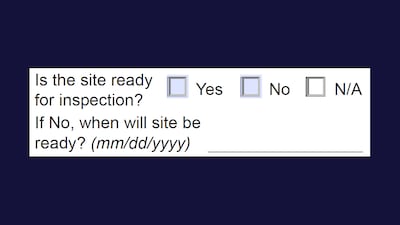
Facilities that are not ready for an inspection can lead to delays in the FDA’s site assessment and leave little time to resolve deficiencies ahead of a user fee goal, CBER compliance office Director Melissa Mendoza said.

A cluster of CRLs for rare disease applications based on one trial plus confirmatory evidence may represent a shift away from the regulatory flexibility that had come to characterize ultra-rare drug development

US FDA’s rejection of Biohaven’s troriluzole is a huge disappointment for patients with SCA and the company. But it is also a notable example of how communication strategies are changing now that FDA is making its ‘complete response’ letters public.

Meeting minute clarifications also are undergoing some modifications as part of Tidmarsh’s plans to increase efficiency and reduce workload with hiring slow going.