

INBRAIN unveiled a bidirectional "rice-sized" BCI chip partnership, Merck commercialization progress and new speech-decoding trial in France as it advances its graphene-based cortical interface toward commercialization, pending regulatory clearance.

Medtech Insight was invited to moderate a panel discussion with leading experts in neuroscience and AI during INBRAIN’s five-year anniversary in Barcelona, Spain. Panelists discussed the promises, perils in BCI development, neuroethics and outlook.
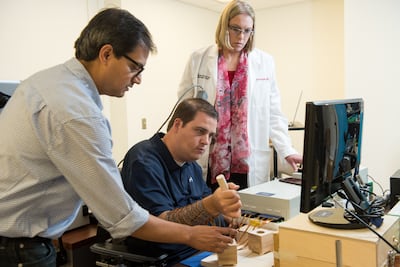
In this final part of a three-part series, Medtech Insight spoke with a neuroethicist and the first person in a trial using a BCI implant for stimulating hand movement. This story explores ethical considerations that arise when projects can no longer support patients with implanted devices.

EIT Health has helped 3,000 start-ups and SMEs scale across Europe and supported over 120 innovations to launch. Inspired by the US MIT, the EIT Health program is on a mission to raise awareness of its value to healthtech innovators as it embarks on new methods of funding its own activities.

Wishes for 2026 from our medtech experts focused on value-based care, faster reimbursements, and better collaboration. Key ideas included enhancing patient engagement, reducing waste, and aligning coverage policies to improve health outcomes and innovation.

Johnson & Johnson is seeking marketing authorization from the US FDA for its Ottava surgical robot for upper abdomen procedures. If granted, Ottava could prove stiff competition for Medtronic and Intuitive.
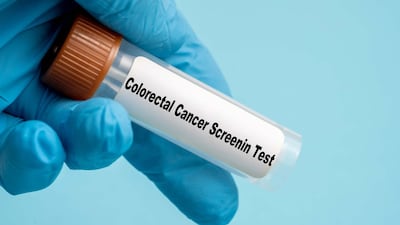
A pair of diagnostic developers backed with venture capital have teamed up with the University of Tennessee to fight colorectal cancer. The collaboration seeks to advance next generation testing to catch one of the deadliest cancers in its earliest stages.

The FDA’s revised guidance emphasizes biological sex in clinical trials, removing references to gender and health equity considerations.
Withings announced at CES that its health monitoring app will integrate data from Abbott’s OTC CGM Lingo starting in Q1.

The US FDA has made incorporating real-world evidence into medical device decisions a lot easier. The agency now says it will accept RWE without requiring it to contain identifiable individual patient data, making more of it available. Many stakeholders welcomed the change.

Medtech leaders expect faster change in 2026 as AI integration speeds up across all business aspects, according to a Deloitte survey of medtech execs that also predicted M&A activity will remain strong in 2026. While optimism is high, uncertainties remain.

Shantanu Gaur, CEO of Allurion Technologies, a company that has developed a swallowable gastric balloon, believes that GLP-1 sales could indirectly lead to increased demand for medical device-based bariatric procedures, especially as patients seek alternatives to drug side effects and weight regain.
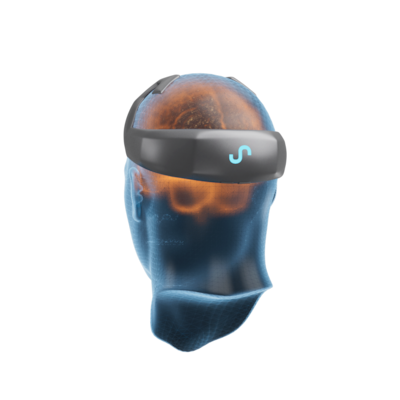
Neurotech start-up Subsense raised another $10m, bringing its total seed funding to $27m. The proceeds will be used primarily to accelerate and enhance the company’s pre-clinical research program.

The US FDA’s General Hospital and Personal Use Devices Panel of the Medical Devices Advisory Committee convened Wednesday to discuss germicidal ultraviolet (GUV) devices as a mode of disinfection, a technology that has emerged since the COVID-19 pandemic.
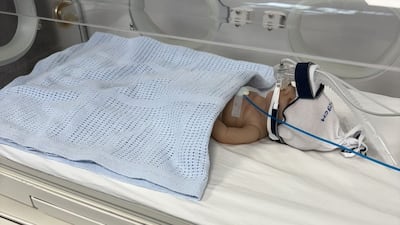
Aerogen, which is Ireland’s largest native medical technology firm, is in clinical trials for Aerofact, a nebulizer aimed at aiding premature infants' breathing. The technology promises easier administration of surfactant, with potential commercial rollout projected in three to four years, if succes

The rise and fall of US tariffs and the chill headwind from China’s state procurement policies have blown onto medtech’s radar. But how to monetize AI is the dominant concern up and down the industry.

Start-up medtech firms in the west of Ireland can benefit from incubator programs at two of the region’s universities, which support innovators across the medical device and digital health industries from concept to multi-employee businesses.
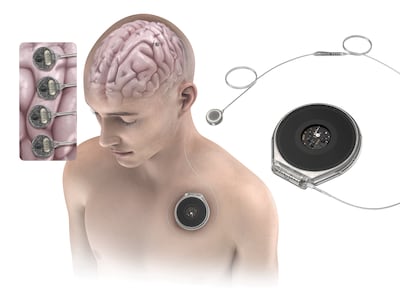
Paradromics won FDA clearance to test its Connexus BCI in two people with severe speech impairment. The 2026 trial will assess whether the device can decode speech in real time.

US healthcare innovation agency ARPA-H has announced a $100m initiative focused on building up the evidence base for fast-acting mental health treatments such as neuromodulation and digital therapeutics. The project is the first major initiative to be led by new ARPA-H director Alicia Jackson.
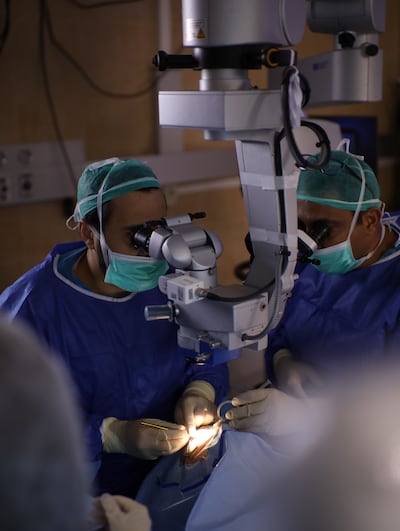
Medtech Insight spoke with Rambam Medical Center’s Michael Mimouni, who implanted the first 3D-bioprinted corneal graft in a human patient, about his hopes for Precise Bio’s approach. The patient is part of a Phase I trial evaluating PB-001 in patients with corneal edema.