
Medtech Insight

The technetium-99m labeled, integrin αVβ3-targeting 99mTc-3PRGD2 has been approved in China as the world’s first SPECT/CT imaging agent for the diagnosis of tumors.

A new survey from Grand Avenue Software found 54% of life sciences firms were no more than “moderately” prepared for the FDA’s new Quality Management System Regulation at its February roll-out. Staffing and financial limitations, regulatory complexity, and lack of collaboration were common concerns.

The US Government Accountability Office urged the FDA to publish long‑required guidance explaining how it evaluates advisory committee member conflicts of interest, spotlighting a transparency gap that has persisted despite a congressional mandate.

A new report from the Wound Care Sector Working Group sounds the alarm: chronic wound care is rapidly becoming a growing burden. The EU must act now to make care coordination, reimbursement and innovation strategic priorities.

Women’s health investment could exceed $600bn by 2030 as high-burden conditions like heart disease, Alzheimer’s, digital health and menopause are expected to draw more interest from investors.

Boston Scientific Eyes Expanded Watchman Indication After CHAMPION-AF Results; Analysts Flag Caveats
Boston Scientific's Watchman FLX matched blood thinners for stroke prevention and outperformed them on bleeding in the CHAMPION-AF trial. The 3,000-patient trial met every endpoint – and Boston Scientific is now moving to expand the device's indication and Medicare coverage.

AI-enabled tools deliver faster radiology reads, clinical decision-support, personalized treatment insights and continuous patient monitoring, but a new report from Firefinch Software and IMed Consultancy advises device developers how to enter and stay in this rapidly growing market.

The global medical device market reached $623.37 billion in 2026 and should exceed $1.08 trillion by 2035. Despite this explosive growth, the journey from research and development to commercialization remains fraught with regulatory complexities, evolving market dynamics, and technical disruptions.

Lee Fleisher, former chief medical officer at CMS, fears that the lack of an insurance coverage framework for implantable brain-computer interfaces could leave these technologies out of reach for patients.

Browne Jacobson partner Gerard Hanratty spoke at BioWales 2026 to give a legal firm’s perspective on how the UK should evolve its medtech regulatory system, pursue global harmonization and take opportunities to embed best practice AI.

Payers' and patients' growing preference for outpatient care is increasing pressure on private providers to continually reassess how they deliver value. Jean-Philippe Grosmaitre and Guillaume Duparc, partners at L.E.K. Consulting, outlined growth opportunities available to private hospitals.

The US FDA has published final guidance on patient preference information to enhance its evaluation of medical devices. The agency says the guidance strengthens patient engagement in the development of devices patients use to manage their health and well-being.

Viome Life Sciences needs to update advertising for its CancerDetect Oral & Throat at-home test to clarify that the test detects cancer biomarkers but cannot diagnose cancer, the Advertising Division said after a recent review. However, the NAD allowed most of the company's advertising to stand.

Patients using an algorithm that analyzes data from a continuous glucose monitor to generate insulin dosing recommendations managed their glucose better than patients who self-monitored, a new study has found.

Medical technology firm HeartBeam and leading heart hospital Mount Sinai want to expand cardiac monitoring capabilities. To achieve this, they are collaborating to advance next-generation AI-ECG technology beyond clinical settings. The joint effort illustrates the growing significance of remote pati
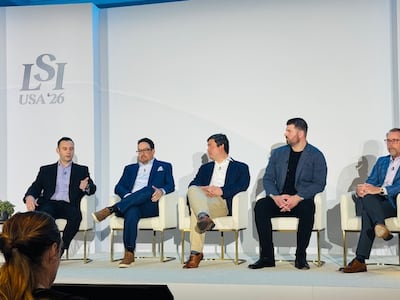
Medtech leaders expect dealmaking to rebound in 2026, but buyers are more selective. Buyers are focused on high-value assets, and AI must prove real clinical and commercial value.

Ultrahuman is back in the US – five months after a patent ruling forced it out. The Ring Pro is redesigned, the pricing model is subscription-free, and the market it is returning to has more competition than the one it left. The real test starts May 15.

Industry association MedTech Europe has welcomed amendments to the AI Act that delay and simplify rules for AI medical devices, but more work still needs to be done on clarity, coherence and system implementation.

Medtronic is entering the basivertebral nerve ablation market through a distribution deal with Merit Medical, bringing the ViaVerte system to a chronic back pain category that Boston Scientific has been building – and that a $1.56bn growth trajectory is making increasingly hard to ignore.

An interactive look at recent executive-level company changes and promotions in the medical device and diagnostics industries.