
Leadership

A major vendor is suing Medicare over new reimbursement policies for skin cancer radiotherapy, which they claim could harm patient access to treatment. The policy applies the same reimbursement level to different equipment types, leading to industry disagreements about whether it’s fit for purpose.

AI in medtech has moved from “experimentation into expectation,” leaders from Dexcom, Boston Scientific and Ajax Health said at the LSI conference. The execs advised start-ups to focus on embedding AI thoughtfully for real solutions, listening to customer feedback, and instilling a learning culture.

An interactive look at recent executive-level company changes and promotions in the medical device and diagnostics industries.
An interactive look at recent executive-level company changes and promotions in the medical device and diagnostics industries.

Vitestro raised an oversubscribed $70M Series B to scale its autonomous blood-drawing system across the Netherlands and expand into Europe. The CE-marked robot has been tested in more than 10,000 patients, and the company is pursuing FDA clearance to enter the US market.
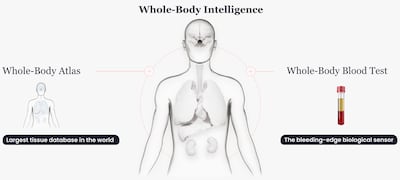
Curve Biosciences is developing a technology that analyzes signals from blood and organs to monitor the progression of chronic disease. The first product is a blood test to monitor patients with liver cirrhosis at risk for liver cancer, the second for MASH.
An interactive look at recent executive-level company changes and promotions in the medical device and diagnostics industries.

Real-world evidence (RWE) is increasingly significant in medical device submissions, with FDA guidance evolving to embrace RWE benchmarks. The National Evaluation System for Health Technology (NEST) partners with firms to streamline RWE use, enhancing regulatory processes.

Nutromics’ wearable microneedle patch seeks to provide continuous drug monitoring in acute care patients starting with the hard-to-dose antibiotic vancomycin.

Surgeon burnout is not a new phenomenon, but where it once was episodic, surgeons now report that it feels more sustained. Support structures have not kept pace, said Johnson & Johnson MedTech VP Africa Wallace on the release of a new study of causes, trends and issues arising.

The US Medicare agency is now covering superficial radiotherapy (SRT) for the treatment of skin cancer. Joseph Sardano, CEO of SRT firm Sensus Healthcare, spoke to Medtech Insight about the potential of the technology and why it’s still facing adaptation challenges.

As brain-computer interfaces near US approval, neuroethics and neural data privacy move center stage. Major medtech deals reshape the market, while new FDA digital health leadership and updated AI, wellness and CDS guidances signal a more flexible regulatory approach.

New Precision IO Group CEO Kurt Azarbarzin outlines the near-term strategy for Quantum Surgical’s robotic-assisted ablation platform and NeuWave Medical’s microwave technology. Quantum recently acquired NeuWave, but the companies will continue to operate independently.
An interactive look at recent executive-level company changes and promotions in the medical device and diagnostics industries.

NextGate Partner’s Jay Byun gives a mixed review of South Korea’s recent biopharma policy measures, saying providing government support to all cycles of R&D may lower efficiency.

Device-based neurotherapeutics face a coverage gap that drug developers do not, and as the field moves toward combination approaches, that asymmetry could undermine important innovation.

Oura is testing a women’s health–focused LLM within its app, aiming to deliver personalized, educational guidance across life stages.

California-based startup Esperto Medical hopes its ultrasound-based acoustic approach to measuring arterial shape and resonant frequencies will provide truly accurate, cuffless blood pressure monitoring.
An interactive look at recent executive-level company changes and promotions in the medical device and diagnostics industries.

After nearly 30 years at NASA, Omar Hatamleh prepares for his next chapter and fourth book on AI. He told Medtech Insight AI will speed up medical breakthroughs, extend life spans and bring AGI sooner than expected but also drive job losses, erode privacy and force humans to rethink their purpose.