
Device Area

Women’s health investment could exceed $600bn by 2030 as high-burden conditions like heart disease, Alzheimer’s, digital health and menopause are expected to draw more interest from investors.

Boston Scientific Eyes Expanded Watchman Indication After CHAMPION-AF Results; Analysts Flag Caveats
Boston Scientific's Watchman FLX matched blood thinners for stroke prevention and outperformed them on bleeding in the CHAMPION-AF trial. The 3,000-patient trial met every endpoint – and Boston Scientific is now moving to expand the device's indication and Medicare coverage.

Lee Fleisher, former chief medical officer at CMS, fears that the lack of an insurance coverage framework for implantable brain-computer interfaces could leave these technologies out of reach for patients.
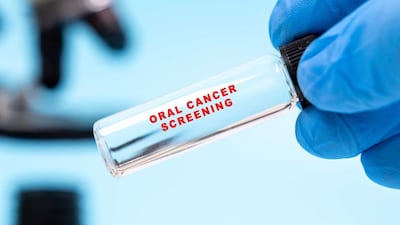
Viome Life Sciences needs to update advertising for its CancerDetect Oral & Throat at-home test to clarify that the test detects cancer biomarkers but cannot diagnose cancer, the Advertising Division said after a recent review. However, the NAD allowed most of the company's advertising to stand.
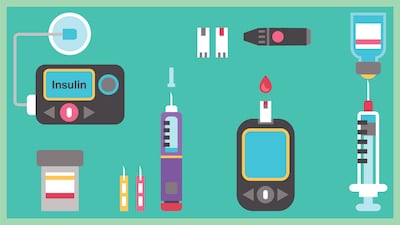
Patients using an algorithm that analyzes data from a continuous glucose monitor to generate insulin dosing recommendations managed their glucose better than patients who self-monitored, a new study has found.

Medical technology firm HeartBeam and leading heart hospital Mount Sinai want to expand cardiac monitoring capabilities. To achieve this, they are collaborating to advance next-generation AI-ECG technology beyond clinical settings. The joint effort illustrates the growing significance of remote pati

Medtech leaders expect dealmaking to rebound in 2026, but buyers are more selective. Buyers are focused on high-value assets, and AI must prove real clinical and commercial value.

Medtronic is entering the basivertebral nerve ablation market through a distribution deal with Merit Medical, bringing the ViaVerte system to a chronic back pain category that Boston Scientific has been building – and that a $1.56bn growth trajectory is making increasingly hard to ignore.
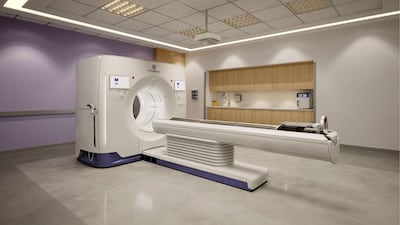
GE HealthCare has spent $5.1bn and decades developing its answer to Siemens Healthineers' photon-counting CT dominance. The FDA just cleared it. Now the harder question – whether the Photonova Spectra's Deep Silicon technology can convert claims into market share – begins.
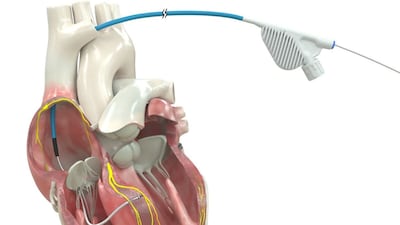
A new FDA indication for Medtronic’s OmniaSecure defibrillation lead marks a step forward for conduction-system pacing, enabling defibrillator-equipped systems to target a portion of the heart known as the left bundle branch area.

During an ECRI-hosted webinar on AI-enabled diagnostics, a panel of experts discussed the promise and risks that come with the technology for both physicians and patients alike.

Neurent’s Neuromark device, which relieves symptoms of chronic rhinitis via ablation of the vidian nerve, could be well-poised to capture an ever-growing and highly valuable market.
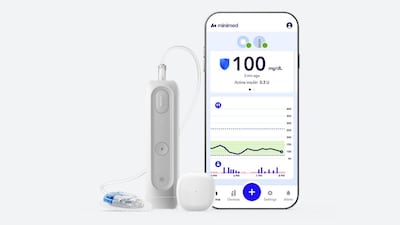
After its IPO, MiniMed has its first FDA clearance as a public company. The MiniMed Flex – smaller, screenless, and smartphone-controlled – is the product the newly independent diabetes firm needed to shift the conversation from market debut to market execution.

Numares Health bets on a metabolomics-based urine test to help doctors detect kidney transplantation rejection earlier than current biomarkers, which would allow doctors to intervene earlier in trying to save the transplanted organ.
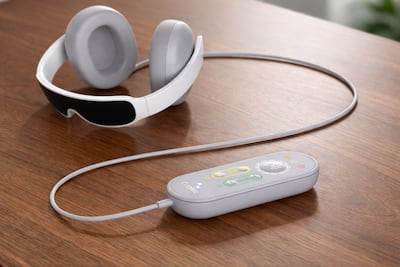
Cognito Therapeutics has revealed data from its OVERTURE feasibility study backing up the ability of its non-invasive Spectris headset to treat Alzheimer’s via the stimulation of gamma oscillations. The company is hoping to launch the device in 2027

The FDA approved JenaValve’s Trilogy HeartValve for treating severe aortic regurgitation, marking it as the first TAVR device for this condition in the US. The approval, which followed promising clinical results, is significant for patients with limited options due to high surgical risks.

The US FDA has issued an early alert concerning Intuitive Surgical staplers used during various procedures with the da Vinci Surgical System. The company is instructing customers to stop using the devices.
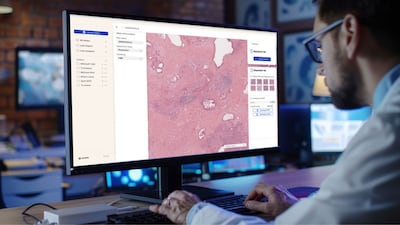
Owkin has spun out its diagnostics division as Waiv, raising $33m to scale AI precision testing in oncology. Waiv CEO Meriem Sefta tells Medtech Insight why the diagnostic infrastructure underpinning precision medicine is already broken – and how Waiv intends to fix it.

Paradromics has launched a new academic-industry collaboration with leading brain-computer interface researchers at Stanford, Mass General, Pitt, UC Davis and Michigan aiming to translate BCI research into devices to help people with speech impairment, stroke and Parkinson’s.

A new final guidance document from the US FDA lays out premarket considerations for devices intended to help treat obesity, including clinical trial design, labeling, and safety concerns. The guidance also calls for sponsors to consider patient perceptions in evaluating device effectiveness.