
Earnings

Henlius is advancing its nivolumab biosimilar HLX18 into Chinese trials, as it expands a global oncology pipeline. In 2025, the firm’s strong revenue growth was offset by rising R&D investment amid increasing contributions from overseas partnerships.

Alvotech is shifting toward dual-source manufacturing and operational execution as it addresses FDA setbacks, expands its biosimilar pipeline and drives growth through global launches, with US approvals representing key upside to its 2026 outlook.
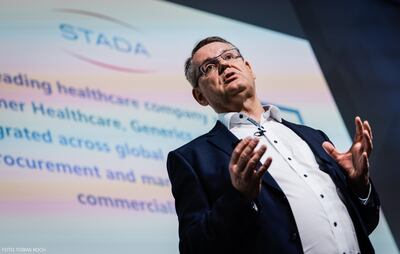
As Stada awaits the imminent closure of a deal that will see it come under the ownership of CapVest, the firm has reported 2025 sales that grew by 6% to €4.3bn, boosted by a double-digit biosimilars increase that drove Specialty sales above €1bn for the first time.
Hikma has introduced the first US rival to Nucynta ER in the form of a tapentadol extended-release authorized generic. The launch comes after the firm reported annual sales that were up but profits that were down, with new CEO Said Darwazah promising to right the ship.

Deal after deal, Formycon was inching toward closing the gap in its annual guidance. Still, it was not enough to meet the goal, as the German biosimilars developer’s preliminary financial report reveals.

Previously known only as AMP-007, the generic Atrovent HFA inhaler is now set for a Q2 launch with six months of exclusivity.

Even Amneal, a prominent off-patent player, is not immune to generic competition, as its Parkinson’s disease drug Rytary is expected to take a hit.

Aspen Pharmacare is targeting early launches of generic semaglutide as patents begin to expire, aiming to be among the first entrants in Canada’s emerging market for GLP-1 rivals and using the approval as a springboard into emerging markets.

Hungarian pharma’s Q4 underlying profitability gain was boosted by strong CDMO activity, with steady-state profitability still targeted for 2027.

Kabi targets mid- to high-single-digit growth and a 16.5%-17% EBIT margin in 2026, raising its long-term ambition as it pivots toward biopharma and innovation – while warning margin gains hinge on volume ramp and operating leverage.

Viatris will cut up to 10% of its global workforce – around 3,000 jobs – as part of a three-year restructuring plan targeting $650m in gross savings, with $250m set for reinvestment to boost growth and innovation, yielding roughly $400m in net savings by 2029.

Sandoz enjoyed good sales and profit growth in 2025, with a significant increase in free cash flow allowing the firm to continue investing in its major European biosimilars manufacturing network.

Lupin is riding a wave of growth across most of its global markets, with biosimilars and other complex products filling its portfolio.

Sawai is anticipating that sweeping regulatory reforms due in April 2026 will reshape Japan’s generic drug market, altering pricing mechanics, margin structures and competitive dynamics.

Biocon Biologics hinted about exploring the development of a higher concentration adalimumab biosimilar, now that it has full rights to the Hulio franchise.

Aurobindo has pushed its projection of an inflection point for biosimilars ahead by a year to FY29 but plans to launch a generic to BMS blockbuster Pomalyst (pomalidomide) in the current quarter. Meanwhile, anti-competitive pricing of penicillin-G by China should now cause less harm.

Organon says investors should model around $100m in peak sales for its denosumab biosimilars, pointing to intense pricing pressure and a crowded competitive landscape.

The Korean player plans to expand its biosimilar portfolio to more than 40 products by 2038, while advancing late-stage candidates including a streamlined Phase III trial of its secukinumab biosimilar.

Strides Pharma aims for higher revenues from Canada and other ex-US markets while waiting for controlled substances to ramp up gradually under the leadership of ex-Apotex CEO Peter Hardwick. However, a cut in US funding for the Global Fund is hurting the company and its competitors.

Slovenia’s Krka is ramping up capital spending to expand global manufacturing capacity, betting that industrial scale and supply resilience will drive its next phase of growth.