
Deals

Medtronic has agreed to acquire Cathworks for up to $585m, converting a long-standing partnership into full ownership as it expands its footprint in coronary physiology and AI-enabled cardiovascular tools.

BioStem Technologies’ buyout of BioTissue Holding’s surgical and wound-care business adds cryopreserved and sterile technologies, Cryotek and SteriTek, and a direct sales force focused on acute care settings.

Boston Scientific’s $14.5bn Deal Folds Penumbra Thrombectomy Platforms Into Cardiovascular Franchise
Subject to shareholder approval,Boston Scientific will acquire Penumbra for approximately $11bn in cash on hand and new debt, and issue 41 million shares for the remaining $4bn.

The market is assessing how the blocked JenaValve transaction affects Edwards Lifesciences’ longer-range growth, particularly following targets laid out at the company’s December 2025 investor day.
Financing

Women’s health start-up Midi Health has raised $100m in a Series D financing, led by Goodwater Capital with new investors Foresite Capital and Serena Ventures. Midi, which focuses on women in midlife, said the money will support the next phase of growth.

With capital being recycled, tariffs settling and interest rates softening, 2026 could provide more investment and growth opportunities in pharma and medtech, with AI giving a tailwind, say Taylor Wessing’s Ross McNaughton and Sarah Cole.

EIT Health has helped 3,000 start-ups and SMEs scale across Europe and supported over 120 innovations to launch. Inspired by the US MIT, the EIT Health program is on a mission to raise awareness of its value to healthtech innovators as it embarks on new methods of funding its own activities.

Atul Gupta, MD and CMO of Royal Philips’ Diagnosis & Treatment business, shares his views about potential developments in imaging and wider medtech in 2026 and the value of AI. He warns that clinicians will not adopt AI they don’t trust, understand or find helpful in real-world conditions.
Investor Eye

Advocates spanning the spectrum of women’s health met in Manhattan to discuss the gender disparities that remain in healthcare and how public policy can correct them and the enormous ROI investors in women’s health can potentially reap.

US FDA inspections of three Philips manufacturing sites earlier this year resulted in a September warning letter that claimed the company was not in conformity with current good manufacturing practices. Philips says it is addressing the agency’s concerns and working to enhance its quality systems.

Thena Capital, the first UK-based early-stage specialist medtech firm, has made its first investment since closing its £50m fund. Medtech Insight spoke with general partner Pamela Walker Geddes to gain insight into Thena Capital’s investment strategy.

Faction Imaging has come out of stealth mode following six years of research and development studying medical imaging workflows in India, Japan and the US.
R&D

INBRAIN unveiled a bidirectional "rice-sized" BCI chip partnership, Merck commercialization progress and new speech-decoding trial in France as it advances its graphene-based cortical interface toward commercialization, pending regulatory clearance.

Medtech Insight was invited to moderate a panel discussion with leading experts in neuroscience and AI during INBRAIN’s five-year anniversary in Barcelona, Spain. Panelists discussed the promises, perils in BCI development, neuroethics and outlook.
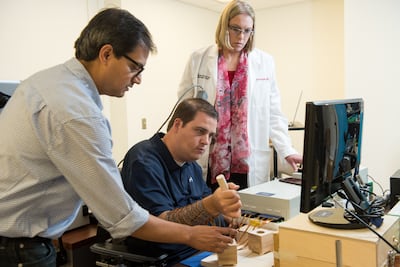
In this final part of a three-part series, Medtech Insight spoke with a neuroethicist and the first person in a trial using a BCI implant for stimulating hand movement. This story explores ethical considerations that arise when projects can no longer support patients with implanted devices.
EIT Health has helped 3,000 start-ups and SMEs scale across Europe and supported over 120 innovations to launch. Inspired by the US MIT, the EIT Health program is on a mission to raise awareness of its value to healthtech innovators as it embarks on new methods of funding its own activities.
Startups & SMEs
With capital being recycled, tariffs settling and interest rates softening, 2026 could provide more investment and growth opportunities in pharma and medtech, with AI giving a tailwind, say Taylor Wessing’s Ross McNaughton and Sarah Cole.
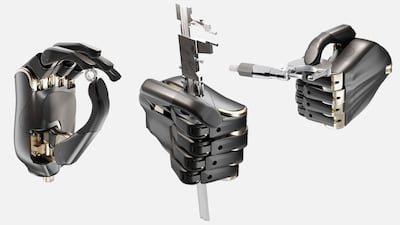
In an era of AI and other advanced computing methods, pure-play mechanical devices could offer better pricing and practicality, according to the CEO of prosthetics company Metacarpal.

Ireland's medtech ecosystem continues to flourish, with more than 50,000 employees across 700 companies. The sector set a venture capital record in 2024 and is on pace to match or exceed it this year.

Start-up medtech firms in the west of Ireland can benefit from incubator programs at two of the region’s universities, which support innovators across the medical device and digital health industries from concept to multi-employee businesses.
Strategy

Boston Scientific also announced a new collaboration with Siemens Healthineers aimed at expanding its structural heart imaging capabilities. The companies plan to develop and commercialize a next-generation 4D intracardiac echocardiography catheter, ACUNAV.
Boston Scientific exits 2025 with roughly a 65% share of the PFA market, within a segment the company believes will grow about 15%.
Besides China pricing reforms, Roche continued to face cost pressures linked to investments in new technologies such as CGM and LumiraDx. Tariffs also weighed on performance.

The timing of the US tariff reset is also notable. It comes days after India and the European Union concluded a trade deal under which duties on medical devices will be cut from 27% to zero, while allowing liberalized tariffs for devices made in India.