
Conferences
Advamed

The US Supreme Court struck a blow to the Trump administration’s efforts to impose sweeping tariffs, ruling the president exceeded his authority. Limiting tariffs has been a priority for the medtech industry.

Inspired by his son’s battle with cancer, Neal Piper founded Luminoah to modernize enteral feeding. Its smart, pocket-sized pump tracks nutrition in real time to prevent malnutrition and improve quality of life for patients and caregivers.
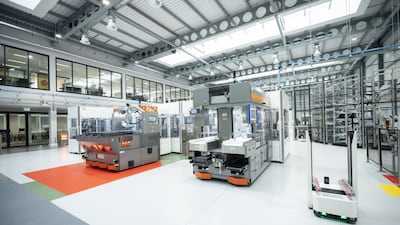
John Nugent, who heads the medtech division at Irish business development agency IDA Ireland, spoke to Medtech Insight about how the country’s 75-year focus on encouraging medtech innovation is shifting in the light of digital health, AI, tariffs, and other new challenges.

Google Cloud healthcare lead Shweta Maniar talked with Medtech Insight about improving health monitoring, boosting regulatory collaboration, and deepening integration of technology in medical practices.
CES

After a steep drop in 2025, women’s health investment is expected to rebound in 2026, driven by renewed focus on menopause, certain chronic conditions and mental health, as well as a shift toward clinically validated products.

A warning letter from the US FDA citing concerns of some Abbott continuous glucose monitors will not stop the company from launching a novel diabetes sensor later this year as planned.

Amid the spectacle of humanoid robots at CES 2026, Swedish medical simulation company Surgical Science opted for a quieter pitch for its suitcase-sized robotic surgery simulator aimed at taking training out of the OR.

The US FDA has updated a pair of guidance documents relaxing the agency’s posture on how it regulates general wellness devices and clinical support software. Industry has mostly welcomed the changes, agreeing with the agency’s view that lighter regulation will help spur innovation.
Digital Therapeutics Alliance

Digital therapeutics aren’t going away anytime soon, but they are positioning themselves as a complement to traditional therapies.
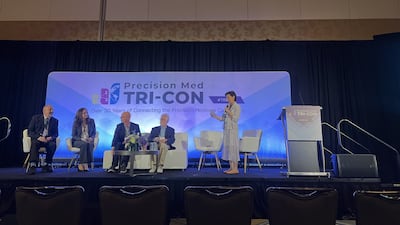
At the recent Precision Med-Tri Con conference, laboratory experts traded views on the expansion of at-home testing for disease diagnosis and personalized health insights. While strong consumer demand spells opportunity, there are significant concerns about the accuracy and reliability of home-testing platforms, misuse, accessibility, and lack of health literacy.

Public and private payors at the Digital Therapeutics Alliance’s 2023 Inaugural Summit weighed in on the coverage environment for prescription digital therapeutics post-Pear Therapeutics and strategic moves companies can make to position themselves advantageously.

A panel discussion between health professionals, industry groups and digital therapeutics innovators at the DTA Summit highlighted opportunities and barriers for the development and adoption of digital therapeutics.
HIMSS

Numares Health bets on a metabolomics-based urine test to help doctors detect kidney transplantation rejection earlier than current biomarkers, which would allow doctors to intervene earlier in trying to save the transplanted organ.

During panel discussions at HIMSS 26 focusing on AI-based tech integration at health systems, tech leaders from Mass General Brigham, City of Hope, Vanderbilt University, and Philips, stressed that start-ups need to solve clinical problems that integrate into workflows and deliver ROIs quickly.

In this week’s Digital Health Roundup, Medtech Insight’s Marion Webb highlights her conference coverage from CES, HIMSS, AAOS and LSI including Exec Chats with Gary Guthart, CEO of Intuitive Surgical, and Arcadia’s chief strategy officer Aneesh Chopra. Brian Bossetta highlights a recently FDA-cleared alert system that sends vital signs to clinicians. Elizabeth Orr discusses FDA warning letters sent to Exer Labs for exceeding marketing claims under what is allowed under the device’s 510(k) clearance. Shubham Singh discusses how Roche's unveiling of its next-generation sequencing (NGS) prototype challenges Illumina. The SBX technology is set to compete directly with Illumina’s NovaSeq and NextSeq platforms.

Medtech Insight sat down with Arcadia's chief strategy officer Aneesh Chopra to discuss interoperability, industry standards and the future of health care data and AI.
HLTH

Viome’s CEO To Expand Into Clinical Diagnostics ‘For Which There Are No Solutions’ With AI, RNA Test
Viome Life Sciences accelerates its push into clinical diagnostics with studies in colorectal cancer and a major partnership with Microsoft to scale its molecular data analysis platform. Viome leverages RNA analysis and AI to detect disease at the molecular level and personalize preventive health.

Delfi Diagnostics is preparing for pivotal trial results that could support FDA approval and reimbursement for its fragmentomics-based lung cancer screening test. Early data suggest strong potential to improve screening uptake and expand access to early detection.
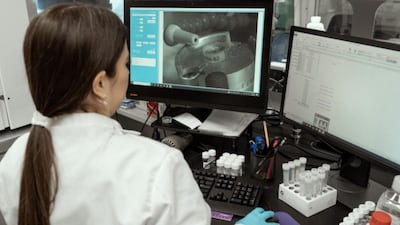
After rolling out its hair-based autism diagnostic across the US, LinusBio is expanding into Japan and testing its “molecular movie” technology for ALS and other neurological disorders, aiming to deliver the first objective biomarkers in pediatric and neuropsychiatric care.

Astrin Biosciences To Launch First Blood-Based Test For Early Breast Cancer Detection, Dense Breasts
Astrin Biosciences will debut Certitude, a proteomics-based blood test for women with dense breasts, aiming to detect early breast cancer with MRI-like accuracy and outperform current supplemental imaging.
J.P. Morgan
Illumina CEO Jacob Thaysen told JPMorgan analysts that clinical consumables, NovaSeq X adoption will anchor company’s near-term outlook amid muted academic demand.

GE HealthCare CEO Arduini believes the imaging market is large enough to accommodate multiple players as adoption progresses, describing photon-counting CT as a long-cycle transition rather than a near-term shift.

While several competitors are developing or launching patch pumps, Insulet CEO McEvoy described Omnipod as differentiated by both technology and manufacturing scale. She said the company has invested roughly $3bn across R&D and manufacturing.
Siemens Healthineers expects to grow revenue by mid-single digits in fiscal 2026, assuming no contribution from China for a second consecutive year.