
Asia

The US FDA has published its annual international harmonization assessment for fiscal 2025, which reports on the device center’s progress in aligning medical device regulations with global standards to improve patient access to safe, innovative technologies.

The timing of the US tariff reset is also notable. It comes days after India and the European Union concluded a trade deal under which duties on medical devices will be cut from 27% to zero, while allowing liberalized tariffs for devices made in India.

India’s medical devices industry entered 2026 on the back of steady market growth amid industry warnings over policy inconsistency and ongoing import dependence.

The US FDA says Olympus has updated its instructions for a device used in many endoscopic procedures after reports of serious injuries. The class I recall follows the FDA blocking imports of other scoping devices from the Japanese firm earlier this year.
Europe

With EU MDR/IVDR review proposals out, UK MHRA progress on a premarket regulation and, up ahead, a prospective consultation on accepting the CE marking indefinitely, now is a good time to assess EU-UK regulatory positions for the benefit of UK industry, says ABHI director Steve Lee.
The US FDA has published its annual international harmonization assessment for fiscal 2025, which reports on the device center’s progress in aligning medical device regulations with global standards to improve patient access to safe, innovative technologies.

Medtech Insight was invited to moderate a panel discussion with leading experts in neuroscience and AI during INBRAIN’s five-year anniversary in Barcelona, Spain. Panelists discussed the promises, perils in BCI development, neuroethics and outlook.

Cardiovascular disease is moving to the top of the EU’s health agenda with the release of the Safe Hearts Plan, European Parliament scrutiny of which is expected at the end of Q1. Medical device companies applaud the initiative but will seek more input as the plan evolves.
International
The US FDA has published its annual international harmonization assessment for fiscal 2025, which reports on the device center’s progress in aligning medical device regulations with global standards to improve patient access to safe, innovative technologies.

The US FDA’s Quality Management System Regulation has officially replaced the decades-old Quality Management System. The new system links with international standards for regulating medical device systems.

As medtech moves toward 2026, experts highlight increased regulatory complexities, particularly around AI, cybersecurity, and device user fees. Urgent regulatory updates are needed to keep pace with rapid technology changes while ensuring patient safety and operational efficiency.

The rise and fall of US tariffs and the chill headwind from China’s state procurement policies have blown onto medtech’s radar. But how to monetize AI is the dominant concern up and down the industry.
Latin America
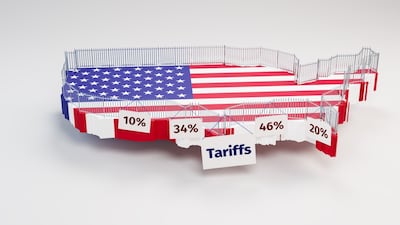
The US Department of Commerce’s investigation into the national security impact of importing various medical equipment could lead to tariffs on many products. Device industry responds by emphasizing the robustness of domestic production, but also the rigidity of supply and reimbursement agreements.

Brazil is planning to update its National Clinical Research Action Plan to make the country a more competitive location to conduct R&D.

Hopes that last-minute negotiations might exempt Brazil’s $300m medtech exports from the latest round of US tariffs have been dashed, leaving the industry braced for further market instability that countermeasures could trigger.

During MD&M East in Manhattan last week, a panel of experts discussed how the Trump administration’s trade policy is affecting manufacturing and offered some ideas on what manufacturers can do to help mitigate the chaos.
North America

The medtech giant violated USA and California antitrust law in its sales practices for devices used to cut and seal blood vessels during surgery, a jury found. Rival firm Applied Medical brought the case.

A warning letter from the US FDA citing concerns of some Abbott continuous glucose monitors will not stop the company from launching a novel diabetes sensor later this year as planned.

Cerenovus is recalling multiple products from its Cerepak Uniform, Cerepak Heliform and Cerepak Freeform product lines due to a higher-than-expected failure to detach rate. While customers were sent a safety alert in October, the US FDA announced the recall on Feb. 5.
The US FDA has published its annual international harmonization assessment for fiscal 2025, which reports on the device center’s progress in aligning medical device regulations with global standards to improve patient access to safe, innovative technologies.