
US FDA

Payroll costs in the prescription drug user fee program increased in fiscal year 2025 despite the reduction-in-force and voluntary departures, which could impact industry efforts to reduce the annual charges.

Pink Sheet editors discuss the impact of a federal judge’s decision that the recent ACIP membership turnover and vaccine schedule changes likely violated statutes, as well as the FDA’s look at new opioid disposal requirements.

The US FDA’s Rare Disease Hub is becoming more concrete, with dedicated 2026 funding and momentum for a more substantial user-fee allocation going forward.

Now that CBER Director Vinay Prasad is leaving the FDA, Regenxbio's CEO is unsure a fast track pathway agreement will remain in place for its Duchenne muscular dystrophy gene therapy, RGX-202.

The consolidation of HR and other services into one unit may require PDUFA funding system changes, and industry rejects the FDA’s proposal to limit the orphan drug fee waiver.

The FDA's widely referenced scale-up and post-approval changes (SUPAC) guidelines could be modernized to acknowledge evolving science and conflicts with newer recommendations.
Pink Sheet editors discuss the direction of the FDA and CBER after Vinay Prasad’s exit, CBER’s similarities to the Harry Potter saga, as well as the Real-Time Oncology Review pilot’s contributions to Commissioner’s National Priority Voucher approval times.
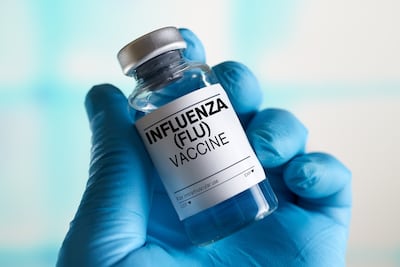
US FDA’s vaccine advisors will meet in March to make flu strain selection recommendations, but the context for the meeting makes a “routine” event feel extraordinary.

Vinay Prasad will leave the FDA less than a year after his initial arrival, having served two tenures as head of the biologics center.

The FDA offered to relax the onshoring criteria to receive a priority ANDA review in GDUFA IV, but could drop another America First proposal.
Pink Sheet editors, as well as Michael Rogers and Douglas Stearn of Canal Row Advisors, discuss short- and long-term issues with the US FDA’s inspection staff and approach.

Barclay Butler will become chief operating officer emeritus before retiring from federal service and be replaced by Melanie Keller.
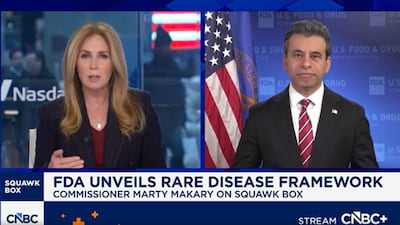
While defending the FDA’s decision-making on rare disease therapies, along with Director Vinay Prasad, US FDA Commissioner Martin Makary talked about review issues in ways commissioners usually do not.

US FDA Commissioner Martin Makary’s first podcast in three months focused on the agency’s Rare Disease Day activities, but, as usual, covered a wide range of issues. A lot has happened since the last episode in November.
Pink Sheet editors discuss the generic and biosimilars industries’ 2026 priorities as well as FDA Commissioner Martin Makary’s interesting take on the compassionate use program.

As FDA streamlines regulatory requirements for biosimilars, Robert Foster said during AAM’s annual meeting that if a company brings high-quality data to the agency, ‘sometimes the student ... teaches the tenured professor something new.’

The FDA commissioner said he signed all compassionate use requests that came to his desk, even though the career staff traditionally handle them.

About one-third of the departures between the end of FY 2024 and the start of the second quarter of FY 2026 were from the drug and biologics centers.

Posting action packages for rejected products, not just the complete response letters, is a provocative idea, but also a reminder of what the FDA has lost by not holding many advisory committees during the Trump Administration.
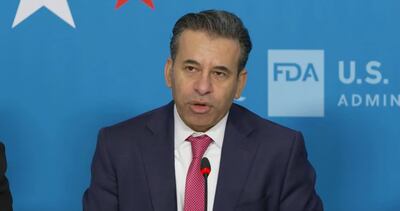
The US FDA commissioner also defended CBER Director Vinay Prasad’s role in the agency’s decision to refuse to file the company’s application for its novel flu vaccine.