DIA

AI is moving from blue-sky potential to specific applications in drug development, streamlining pharmacovigilance and clinical trial design, but strong governance remains essential to ensure transparency and reliability.

Real-world evidence is becoming increasingly sophisticated, but fundamental issues like data reliability remain central to the discussion.

The FDA will take a hard line on trial design and site selection to ensure applicability to the US, Oncology Center of Excellence Director Richard Pazdur said during a meeting on GSK's Blenrep.

Companies can propose specific issues for discussion during the regulators’ monthly teleconferences, which focus on finding areas of agreement and reasons for nonalignment on specific pediatric development plans or general issues.

Sponsors should investigate signals of possible fraud in a manner that does not raise alarms or else evidence might disappear, UK and US regulators said.

Ongoing questions about user fees exerting too much influence over the FDA could spawn a shift in the PDUFA structure when talks begin later this year.

Tala Fakhouri said the agency’s use of the AI tool in the review process has generated lots of questions.

Artificial intelligence tools used for clinical research should be developed with input from patients and focus on their needs and abilities, FDA experts said.

US FDA Commissioner Martin Makary will establish "national priorities" used to select sponsors for the pilot of “tumor board-style” drug reviews that would start before Phase III is completed.

Despite following the path of the popular Project Orbis, the cell and gene therapy international collaborative review pilot is being reconsidered by the FDA's new management.
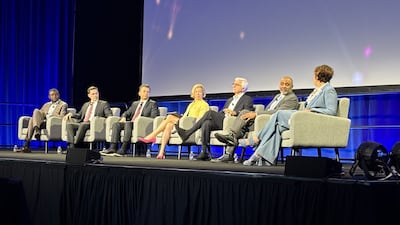
The FDA will use electronic health records to “get eyes” on drugs immediately after approval, Commissioner Martin Makary told the DIA 2025 Global Annual Meeting. He also wants to reduce development time with better communication and new approval pathways.

At this year’s DIA China meeting, the national regulator updated its policy focus areas for this year, including clinical trial data protection and pilot projects to shorten IND approval times.
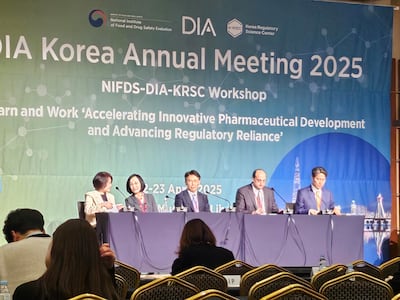
DIA Korea hears how multiple domestic and global factors are affecting the environment for clinical trials in South Korea, and what actions may be taken to address this.

Sponsors should review longstanding agency concepts on consumer-friendly language and claims limitations, along with Office of Prescription Drug Promotion research and enforcement, when applying the 2018 CFL guidance to direct-to-consumer advertising, Sidley Austin’s Cope says.

Sponsors should consider the DTC ad's audio as the major statement about a prescription drug’s side effects and then choose strategically how to display the accompanying text. TV ads are now employing banners and larger text to satisfy the rule’s “dual modality” requirement.

Pink Sheet infographic shows that while overall growth continues at the drugs and biologics centers, the US FDA still must add many employees to meet user fee-mandated hiring goals.

Amid a push for new incentives, the US FDA’s Kerry Jo Lee, associate director for rare diseases in the Center for Drug Evaluation and Research’s Office of New Drugs, said in an interview with the Pink Sheet that the tools ultra-rare sponsors need already are available.

Many platform designation requests have been from sponsors eager to cite other sponsors’ products, but CBER Director Peter Marks said in an interview with the Pink Sheet his office likely is years away from accepting those applications.

US FDA review divisions will determine whether the meeting is appropriate because there are no one-size-fits-all requirements.

Meeting requests related to the Oncology Center of Excellence’s new dose optimization approach are increasing, along with sponsor questions, prompting the US FDA to determine how to clarify its intentions.